Guide
Will your city want a permit for your catio?
You have a spot in mind and a rough size, and you do not know whether your city wants a permit. You can find out in three steps: measure the footprint and height, note whether it touches your house, and ask your building department. This guide shows what to ask.
Have the space measured and quoted first, with nothing to sign.
What we do
We line up an independent catio builder near you who comes to your home, measures the space and gives you a written quote before any deposit.
The measure-first promise
- Asking costs you nothing, and nothing is owed until you book.
- You see a written quote before any deposit is due.
- Your $100 credit is applied exactly as the Terms describe.
- If the introduction goes wrong, tell us and we help put it right.
The builder you hire does the work under your own agreement with them.
SignedCattio Builders, (315) 640-3590
Read the full termsStart with three things you can measure
A permit question begins with the structure, not the rule. Before you phone anyone, work out three facts about what you picture.
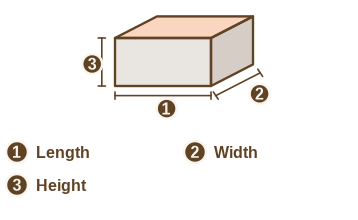
- The footprint: length times width, in feet.
- The height, from the ground or the deck to the top of the roof.
- Whether it touches your house or stands on its own.
Write the three down. Your building department may ask for them first, and so will a builder at the visit. The table on this page shows the size line each of our eight cities uses, so you can set your numbers beside it.
A model code is not your city's rule
The International Residential Code is a model. The 2021 text leaves a blank for each adopting jurisdiction to write in its name, and its appendices apply only where the adopting ordinance names them.
So when you read about a size limit online, ask which code it came from and whether your city adopted it. Ask your building department, not a website.
State codes differ too. Minnesota's applies statewide, and Georgia lists the 2024 edition with Georgia amendments among its state minimum codes. Neither tells you what your city does with a catio, so you still ask.
Your options
The four ways out
Window box
On the sill, watching the yard
A mesh box at the window your cat already uses.
See window box catioWall off a door
At the door or flap to the patio
A structure that starts at your door or cat flap.
See wall catioYard enclosure
At the glass, eyeing the grass
A yard enclosure, with or without a tunnel.
See yard catioPorch or balcony
At the balcony door, crying to go out
Mesh around the porch or balcony you already have.
See porch or balcony catio
Size against the rule
Your size against your city's rule
Many cities draw a line at a certain size.
| City | What it covers | Size |
|---|---|---|
| SeattleWA | City rule Detached sheds only | 120 sq ft |
| PortlandOR | State code adopted by the city Detached structures only | 200 sq ft |
| San DiegoCA | City rule Detached sheds on the ground only | 120 sq ft |
| DenverCO | City rule Detached sheds only | 200 sq ft and 14 ft high |
| PhoenixAZ | City rule Detached structures only | 200 sq ft |
| AustinTX | City rule Detached structures only | 200 sq ft and 15 ft high |
| MinneapolisMN | State code adopted by the city Detached sheds only | 200 sq ft |
| AtlantaGA | Ask the city: no size rule is on file | Ask the city |
Detached structures only. Attached builds: ask the city.
Each line is sourced on that city's own page. Open the city to see the official page it comes from.
Attached or apart
Does your catio touch the house?
Read the exemption's own words
Many cities list structures that need no building permit. A catio is not a shed, so read the words closely before you rely on them.
Seattle's shed exemption covers a single-story, detached shed that holds storage only. Portland's covers a non-habitable, detached, one-story accessory structure. Check whether a cat enclosure fits either description, and ask the department if you are unsure.
Some exemptions stop at certain lots, such as San Diego's for a historical resource and Austin's inside a flood hazard area. If either describes your lot, ask before you book.
Denver adds a twist. It says adding light, heat, air conditioning or water to an exempt shed may call for trade permits. If you want a light or a heated shelf for your cat, tell the builder and ask whether it changes the answer.
Attached is not the same as detached
The model-code exemptions we hold cover detached structures, and decks that are not fixed to a dwelling or serving the required exit door. A wall catio fixed to your house, or mesh on a balcony off your door, sits outside that wording.
Ask your building department how it treats an attached structure of your size. Write the answer down, with the date and who gave it to you.
Three shapes, three permit questions
A window box hangs from your wall and is small, so ask whether the department cares about it at all. A wall catio joins your house, so ask about the attachment as well as the size. A yard catio stands alone, so ask about the footprint, the height and how far it must sit from the lot line.
A porch or balcony catio changes something that already exists. Ask whether closing it in with mesh counts as a change, and ask your landlord or HOA at the same time.
An exemption is not a waiver
The model code says a permit exemption never authorizes work that breaks the code or any other law or ordinance. Phoenix's 2024 code amendments say the same thing for that city. Zoning rules such as setbacks and lot coverage can still apply, as Portland notes for carports even when no building permit is needed.
So ask about the spot as well as the size. A small structure in the wrong place can still be a problem.
Landlord or HOA
Ask your HOA or landlord first
What to ask your building department
- Does a structure with my footprint and height, attached or detached, need a permit?
- Which code and which edition does the city use?
- Do setbacks, lot lines or zoning limit where it can stand?
- Does anything about my lot, such as a flood area or a historic listing, change the answer?
- If a permit is needed, what do you want to see with the application?
Phone the department or use its website, and keep the reply. An email is better than a phone call, since you can show it to the builder.
Who pulls the permit
The model code says an owner who intends to construct, enlarge or alter a structure applies to the building official and obtains the permit first. A builder may apply for you or ask you to.
Settle that before you book. Ask the builder to write on the quote whether a permit is needed and who applies, and keep that line in your own copy.
Suburbs and unincorporated areas
Our city pages cover the cities they name, not the towns around them. A suburb, a county or an unincorporated area sets its own rules. If you live outside the city limits, your own town or county is the one to ask, and the city's answer may not apply to you.
What the department might say
You will usually get one of three answers. No permit is needed, a permit is needed, or it depends. Each one has a next step.
If no permit is needed, ask them to say so in an email, and ask whether any setback or zoning rule still applies. If one is needed, ask what the application takes and who files it. If it depends, ask what detail it depends on, then go back to the builder and get that detail onto the quote.
Your next step
Measure the three things, make the call and set the answers beside the builder's quote. Then send us the spot, and an independent builder near you can come and look.
After reading
The builds this guide leads to
Wall Catios off a Door, Flap or Window
A structure that starts at your door or cat flap
Freestanding Yard Catios
A yard enclosure, with or without a tunnel
Bring your measurements and ask for a visit.